• Featured Stories
  • Journal
  • Instagram
  • Portfolio
  • About Me
  • Contact
Menu

Raja Hamid

  • Featured Stories
  • Journal
  • Instagram
  • Portfolio
  • About Me
  • Contact
Recent posts
2025 video recap - 1 second everyday
Tokyo and Hokkaido 2025 - trip notes
Mariposa Taqueria (Copy)
Best things I've eaten around Seattle in 2025
Popular posts
Mariposa Taqueria (Copy)
Best things I've eaten around Seattle in 2025
2025 Goals (markoff).png
My 2025 goals recap - what got done, what didn't, and lessons learned
2025 Goals.png
Outdoor goals for 2025 - effort vs interest matrix

Message me

Solo hiking Section J of the PCT in 4 days

October 08, 2022

Earlier this year, I publicly shared my outdoor goals for 2022. Hiking Section J of the Pacific Crest Trail, from Snoqualmie to Stevens Pass was on that list. Eight months ago, here’s how I described it:

As soon as I saw this line on a map, I was immediately interested…there isn’t a single road that you’d come across til you’re finished. Many of the dozen alpine lakes are even swimmable in late summer. Some areas are impassable until the snow fully melts in August…and would require taking some days off to complete…Five days would be the plan if Leah can join me, but I’d attempt it in four days if I was going solo. The hardest part may be arranging transportation for a drop-off and pickup.

As the summer started to come to a close, I’d become aware this objective hadn’t yet been crossed off. A late-September window of mild temps and clear skies was in the forecast. Leah was away for another week. Just like that, a few days before heading off, I committed to what I fully expected would be a leisurely long weekend of solitude in the mountains.

Day 1 of 4 — 19 miles, 5,200ft elevation gain

My initial concerns about getting to the Snoqualmie Pass trailhead were settled when Cindy offered to drive. She had been eager to get on a day hike and also loved helping PCT thru-hikers as a trail angel. We pulled up to a mostly empty parking lot on Thursday morning. She kept me company for the morning hours, eventually turning back to return home after wishing me well.

View fullsize _DSC0281.jpg
View fullsize _DSC0274.jpg
View fullsize IMG_3393.jpg

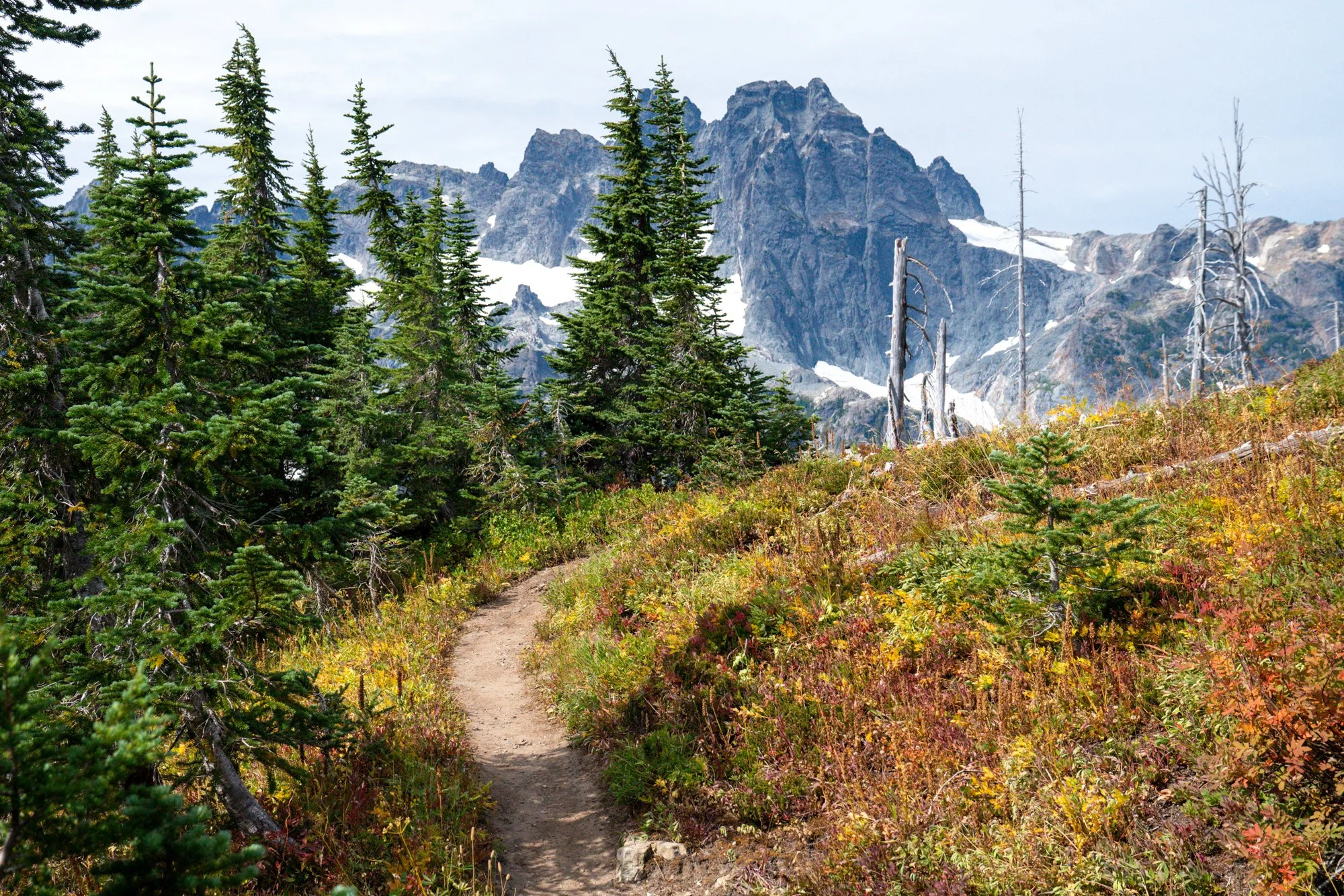
I was now alone, but I kept the same pace. There was enough daylight for me to cover the next fifteen miles. Pretty soon the Kendall Katwalk, a 600ft section of trail, appeared through the thick fog that draped the mountains. This footpath, blasted into the side of a cliff, is estimated to have cost $10,000 per foot to build and was the most dangerous and complex section of the PCT. It was intended to relocate the original line of the trail to the ‘true crest’ of the Cascades.

The handful of day hikers that passed me earlier in the day were now turning back. There were only two other PCT thru-hikers heading deeper into the mountains with me. One of them, Burner (named for being easily sunburned), had a goal of 30 miles a day to make his flight home to Prague. Even by PCT thru-hiker standards, that was ambitious. Anyone who has made it this far, after starting at the US-Mexico border, had spent the greater part of the year on trail every day, hammering their bodies to the routine of walking on rough terrain with a loaded pack.

View fullsize IMG_3416.jpg
View fullsize IMG_3452.jpg
View fullsize _DSC0362.jpg

I, on the other hand, hadn’t exercised in at least three weeks and it had been months since I even laced up my running shoes. I assumed fitness from early-summer cycling would help me get through the four days ahead of me. I didn’t think much about how the body mechanics of hiking were different from pedaling.

The seeds of doubts were on my mind when I stumbled and fell, halfway to my intended campsite. I landed directly onto my right knee. My my chest was pressed into the sandy dirt, pinned down by my heavy pack. I rolled over to get back up. I looked around and couldn’t believe what had just happened. I had tripped on completely flat ground, without any obstacles bigger than a clearly visible small root. I rolled up my pants for a quick glance and spotted the fresh gash on my kneecap. It was still new, a clean white streak brightly shining against my skin; in a minute it would begin oozing with blood. I rolled my pants back down, hoping to distance myself from what just happened.

I continued along the trail, with a faint patch of red darkening on my my pants with each step. Regardless of what I did next, making it to camp was a non-negotiable. My pace had slowed down significantly and waiting around to clean my wound would cost minutes of daylight that I didn’t have to spare. There wasn’t much I would’ve been able to do anyway with my wound. In an effort to go light, the my first aid kit was a tube of antibiotic ointment and wet wipes.

Eventually, I found my stride again while I contemplated what I should do to avoid an infection. I could always spend a night at camp and retrace my steps back to Snoqualmie Pass, calling off the entire attempt. I decided to defer the decision til the next morning.

Spectacle Lake, my destination for day one came into view. My camp for the night would be the small spit of land jutting out into the lake. My spirits were lifted, especially knowing I’d have the entire place to myself. Despite the spectacular stumble and the gear with my backpack’s outer pocket falling off, I started to feel lucky.

View fullsize _DSC0384.jpg
View fullsize IMG_3502.jpg

When I arrived after nine and a half hours, I settled on a campsite with a view of the Three Queens. I imagined I was a castaway on an island with views of water on both sides of me. A howling wind was racing over the passes from the north. As I began to set up my tent sheltered by a patch of trees, to my surprise, the shock cord on my tent poles were completely limp. I hadn’t used this tent in over a year and it must have deteriorated in my closet. I managed to still connect every segment with some effort but saw this as a continuation of the bad luck of the day.

Over dinner, I studied my the gash on my knee. Dry blood thickly coated the surface, sticking to my skin and tinting my entire knee a blush. I did my best to clean with sanitized hands. I vowed to bring a proper kit next time. Being Wilderness First Responder certified doesn’t mean much without the right tools.

After eating what felt like not enough food, I slipped into my tent just as light of the day was fading away. I laid down, exhausted and defeated. Today was already a lot more than I was mentally and physically prepared for and this was the easy day.

View fullsize _DSC0388.jpg
View fullsize IMG_3514.jpg
View fullsize IMG_3507.jpg

Day 2 of 4 — 27 miles, 4,800 elevation gain

I was wide awake just before my 5am alarm. I peeled myself out of my sleeping bag, quite literally. My knee had left a stain on the nylon overnight.

My view of the Three Queens was changing every time I glanced over while preparing in the dark for the day ahead. I decided I was lucky to be here. My father-in-law often mentions how few people he’d come across in the wilderness when he hiked as a student in Colorado College and how special that felt. I wanted to experience some of that magic of being remote in the woods. Although I had my inReach, I chose not to turn it on until the last day. I wanted to be alone with my thoughts and see where they’d take me, and even resisted the urge to entertain myself with music or my long queue of podcasts.

My knee looked and felt fine, so I committed to my plan and pushed myself north towards Stevens Pass. Today’s goal would be Deep Lake, over a marathon length away. My body overall was feeling stiff, but I had more daylight today with an earlier start.

View fullsize IMG_3539.jpg
View fullsize IMG_3544.jpg
View fullsize IMG_3541.jpg

My campsite had been a half mile off the main PCT trail, and to avoid backtracking I chose to follow what looked like another trail that paralleled the PCT until it eventually merged.

Within minutes I was navigating through a web of crisscrossing footpaths, some leading to nowhere. I relied on my watch to guide me and always finding a cairn and what was certainly a faint trail below the overgrown forest. Eventually, I found myself in thick, chest-high brush, lurching forward with every step. It was so thick that I doubt my feet ever fully touched the ground. I asked myself whether I should stubbornly push forward at this snails pace or backtrack. I decided to keep on for a few minutes longer. Once out of the brush, I was greeted with an open clearing that ended with a 40ft cliff that didn’t appear on my map. My gps wanted me to be on the other side of the drop and I couldn’t see an obvious path. I wandered around for ten minutes before I found a safe crossing down a steep and loose ravine. The only footprints I saw were from deer, and my map told me this was the Old Spectacle Lake Trail. Losing almost an hour of time, I tried not to think too much about my unfortunate start to the morning.

View fullsize IMG_3571.jpg
View fullsize IMG_3565.jpg
View fullsize _DSC0487.jpg

From the bottom of Lemah Meadows, I pushed myself up almost twenty switchbacks, trying not to think too hard about how the outer part of my right knee was growing stiffer and more painful by the hour. I paused for a break at a clearing and gazed into the open valley sweeping up into the jagged peaks characteristic of the Cascades. I was only a quarter of the way through the day but I tried to find little truths to tell myself, like how I was almost halfway done with the climbing for today at least.

Just as I was getting ready to pack up, I heard a booming sound that was growing louder. It echoed across the valley and I finally spotted them. Two military planes were cruising through the mountains heading north. I was a little jealous imagining how much fun they must be having. I hadn’t seen a single person all day except the pilots. It made me feel a little less alone and occupied my thoughts for the next hour of climbing.

View fullsize IMG_3599.jpg
View fullsize _DSC0491.jpg

I kept waiting to see who I’d run into today, but there was no one. Hours later on my descent I got a view of Bears Breast Mountain, one of the most spectacular peaks I’d ever seen, like several mountains layered onto each other. Within seconds of putting my camera away, the pilots from hours before came by to do a lap around Bears Breast.

My mind was feeling weary at this point in addition to my body. By the time I reached the Waptus River, my watch was telling me I had covered the same mileage as yesterday. I took my shoes off and let my bare feet soak in the running water, rubbing the bottoms of my feet on the cool, polished stones to try and dry them. At the bottom of both feet, hotspots had formed into fat blisters that I felt with every step today. I poked at them in fascination. Although the trail runners I wore weren’t new, the custom insoles I had on from my podiatrist had never seen this kind of mileage before. Another poor gear choice.

View fullsize IMG_3608.jpg
View fullsize IMG_3626.jpg
View fullsize IMG_3605.jpg

It had been over ten hours since I left camp and I’d covered over 20 miles. There was one final climb left before closing the chapter on my longest day on the trail. I had enough left in me to make the push, even though my right leg’s IT band had gone from yelling at me to now screaming. I took both an Aleve and Tylenol just to get by.

As I thought about how much damage I was doing to my body, and how quickly I would recover, I heard a soft “hello” above me. It startled me and I panic-jumped. A forest ranger was waving to me and apologizing for the surprise. She and her partner came closer and chatted with me about my day. They had just finished digging a new pit toilet at Deep Lake, my destination for the evening. She seemed to trust that I had good LNT skills, so she gave me a directions to her secret camping spot right on the water. Her partner agreed that it was his favorite as well. I promised to take good care of it and thanked them for their work on the toilet.

View fullsize IMG_3628.jpg
View fullsize IMG_3634.jpg

I had a burst of joy from hearing about the special site, and I hurried to get there. Unfortunately, even though mentally I had unlocked a new level of excitement, I couldn’t shift my body into a higher gear no matter how hard I tried. My legs felt like stumps that could only move at one speed.

I was thrilled to make it into the camp at Deep Lake, and it was a beautiful welcome to my home for the night. The light was beginning to fade from the sky and there wasn’t a single breeze or bug in the air. Most importantly, I was all alone again. I hurriedly set some water to boil for dinner before I would need to eat by headlamp. I set up my tent while my meal rehydrated. I was getting into the groove of setting up for the night, even with a broken tent. I was even a little happy. I resisted the temptation to message Leah from the inReach. I felt so far away from everyone and there was a bit of sweetness to my loneliness. As I drifted off to sleep, I was happy to know that I had found what I was looking for when I set off on the trail, even if it hurt a bit.

Day 3 of 4 — 21 miles, 4,800 elevation gain

I woke up at 5am again after another dreamless night. Within minutes of opening my eyes, I rolled over in my bag to begin heating up water. It’d be another morning of oatmeal with a piece of leftover chocolate. I was struggling to keep the food down today though. I tried eating faster, but that made me want to throw up even more. I eventually forced it down and made a mental note to add more sweetener next time.

I packed up my tent and started to look for the fresh toilet I had heard about yesterday. I needed to backtrack a half mile on the trail to find it, and without realizing it I added an extra mile to my day.

View fullsize IMG_3664.jpg
View fullsize IMG_3661.jpg

My day started with a steep and steady climb. I saw no one and was starting to get used to this solitude. The first hour of every day started the same way. The air was perfectly still and the only sounds was shuffling of my legs and the occasional ding of my poles hitting a rock. The blisters below my feet would remind me of their existence but eventually the wincing pain that dominated my headspace would recede into the background of my thoughts.

As I crested over Cathedral Pass, I saw other people ahead. By the looks of their clean outfits and thin packs it was obvious they were day hiking from a side trail. A few of them stopped to ask me what I was up to. For a brief moment, I felt pretty smug when they were impressed I had only started two days ago.

View fullsize _DSC0521.jpg
View fullsize IMG_3683.jpg

It wasn’t long before I was alone again. For the next few hours on trail, I felt possessed. My body was moving forward slowly without conscious effort. I had shut my brain off, and wasn’t thinking about how stiff my knees felt, or how the small muscles in my shins were burning with every ankle flexion. I wasn’t even allowing myself to enjoy the sweet smell of pine trees for very long. If I tuned out for long enough, this would go faster I figured.

At this point on the trail, I was mostly within the woods. I was grateful for the shade and could see hints of the bright sun that I was being shielded from. While shuffling robotically along on the trail, I came across another hiker, Giuseppe, who was doing the same hike but had started a day earlier with the intention of completing in five days. Both of us agreed that this would have been a lot more enjoyable in six.

View fullsize IMG_3719.jpg
View fullsize IMG_3706.jpg

I would have hiked with Giuseppe, but my goal for today was several miles past where he intended to stop. Both of us were hurting, and it had been nice to share what had been on our minds while we quietly pushed our bodies along the PCT. I was hoping he would catch up, and I’d often turn to see if he’d be around the corner.

As I headed further north, I was finally experiencing the smoke of the Bolt Creek fire which had started two weeks ago and was continuing to smolder. The threat of smoke was enough for me to consider calling off the entire trip and I spent more time studying air quality maps than anything else leading up to the trip. I packed a bundle of N95 masks that I was willing to hike in if necessary. It smelled faintly like being at a campground but the smokiness grew fainter as I climbed higher up to Pieper Pass.

As soon as I made it to the other side of the pass, I breathed a lot more easily. The wildfire smoke only crossed my path for less than an hour. I didn’t feel so lucky descending the other side though. The descent was a set of switchbacks carved into a steep boulder field. As beautiful as this experience of being deep in the mountains was, I wanted to be home. Each uneven and unbalanced step on loose talus sent a shooting pain into my shins. I even yelped at a few moments.

View fullsize IMG_3728.jpg
View fullsize IMG_3737.jpg
View fullsize IMG_3742.jpg

Fortunately, I didn’t have much longer to go and knew I’d clear the last two miles before dark. My last long day on the trail was almost over. This felt like a small a finish line before the real finish. Trap Lake lay below me and I could see exactly where I’d be camping, right at the head of the lake. I could already tell I’d have the place to myself.

Once I made it to camp, I dipped my feet into the soft sand below the water. I stepped in further, almost to my knees. I didn’t want to risk an infection from the open wound I had.

I was limping around the campsite setting up my tent. My legs had been dominating my thoughts for the last three days, but they felt entirely foreign to me. This level of damage to my body was unfamiliar to me. The only reason I hadn’t given up was because it wasn’t an option. After a certain point, going back to the start would be just as difficult as finishing. In my tent, I pointed my headlamp down at the bottom of my feet, studying the blisters, bruises, and incredible swelling of my ankles. I had enough left in me to finish this tomorrow.

View fullsize IMG_3752.jpg
View fullsize IMG_3758.jpg
View fullsize IMG_3764.jpg

Day 4 of 4 — 13 miles, 2,300 elevation gain

After yesterday’s regrettable oatmeal, I skipped making breakfast and went straight onto the trail with snacks. I figured the sooner I started, the sooner this would all be over. Mentally, it already felt like it was over. I had settled my mind into a headspace of today being my victory lap. There was a real bed and warm meals awaiting me, and the only thing that separated me from rest was half the mileage and elevation of the previous days.

Even though my pack had been lightened by the meals I consumed, my body carried the fatigue of more mileage and elevation than I had ever done in a short window of time. I buckled to the need for extra motivation, so I finally put on some earbuds to listen to music saved offline. The songs kept my mind occupied and my body now was purely a machine moving along.

View fullsize IMG_3775.jpg
View fullsize IMG_3783.jpg

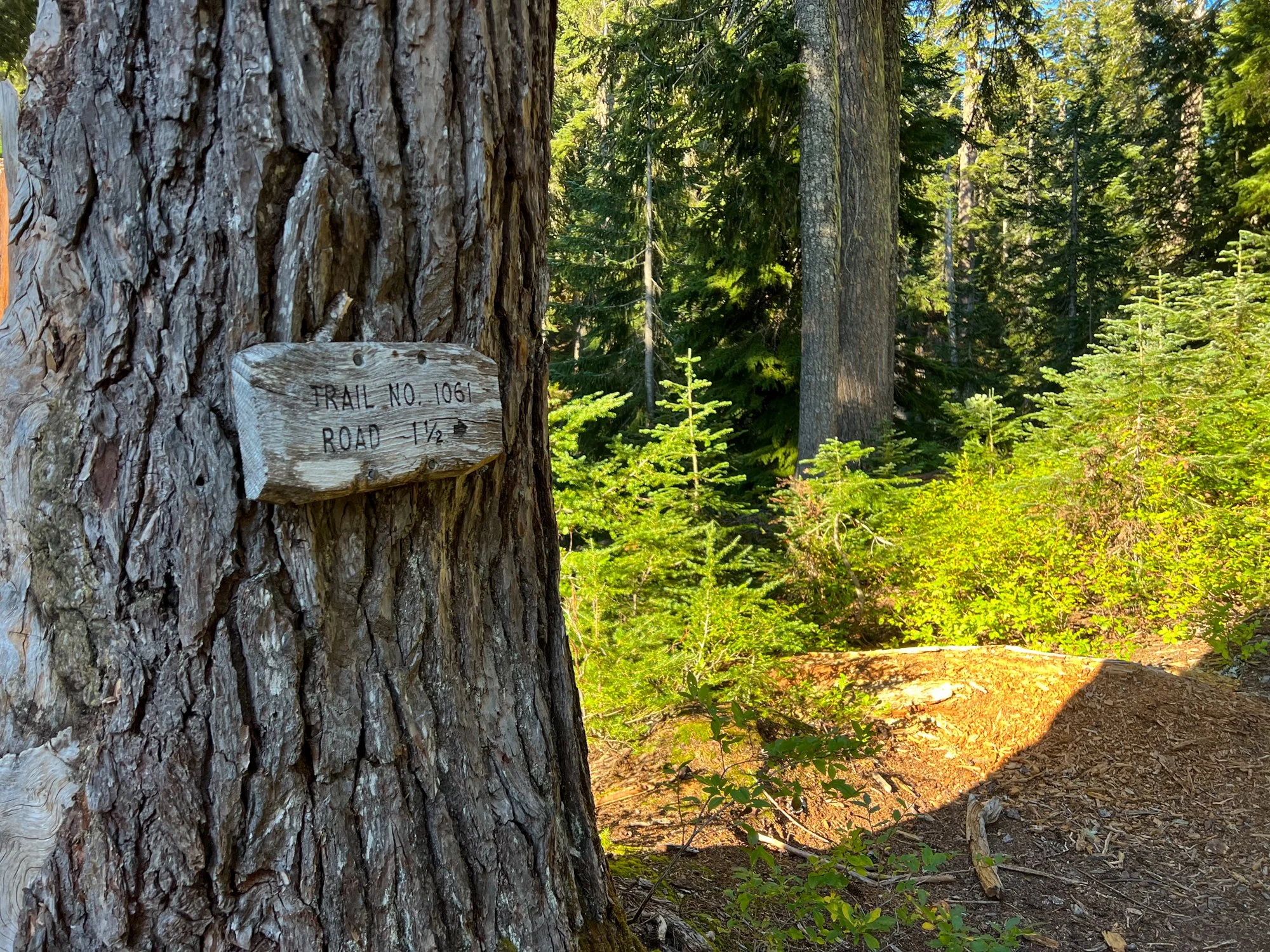
After an hour or so on trail, I came across a junction to the Tunnel Creek trailhead, which just over a mile away. This was a shortcut, an escape hatch from my suffering. The sign promised that this could all be over in less than an hour. I was already aware of this path and had been thinking about it all day.

I could skip the last ten miles of the PCT Section J by just veering left instead of continuing north. I walked in circles trying to decide what to do. I wondered if the last ten miles would break my body down in a way that I’d regret, or whether I’d regret that I hadn’t actually done Section J of the PCT. To justify all that I had already endured, I wanted to I complete it properly. I skipped the shortcut and plodded along.
View fullsize IMG_3784.jpg
View fullsize IMG_3790.jpg

The next ten miles felt like the longest miles of the entire trip. Because I expected today to be twice as fast, I must have also expected it to be twice as easy. Instead, every step was just as challenging today as it was yesterday, if not more. As I got closer to Stevens Pass ski resort, the trees disappeared and I found myself walking over the same ski runs that I enjoyed so much just five months ago. I was finally feeling the full force of the sun without the shade I had grown accustomed to. I did at least have cell service and called Leah. I shared with her what I’d seen and done. I was only gone for four days but it felt like so much more.

View fullsize IMG_3810.jpg
View fullsize IMG_3807.jpg
View fullsize IMG_3798.jpg

Earlier in the day I sent my friends an inReach message letting them know when I’d arrive to Stevens Pass. They were there already doing volunteer work and promised me a big lunch. It was a warm thought to know I had friends waiting for me at the end with crispy and juicy pork roast. 80 miles and 17,000ft of elevation gain later, it was finally done and I could cross it off my damn list.

Post-trail thoughts

Unlike most of my adventures outdoors, this one doesn’t end in triumph or joy. I was just relieved to be done. I went into it thinking this would be something I could do off the couch, without any ramp up of my hiking fitness. I was very wrong. On the one hand, I’m proud of myself for mentally pushing through a level of suffering far beyond what I thought I could manage. On the other hand, I was woefully unprepared in gear (first aid kit), in hiking fitness (cycling fitness is not hiking fitness), and I’ve got several weeks of recovery to heal the damage to my body.

This was also a lesson in humility. A year ago, when I drafted up my ambitions for 2022, I severely underestimated this challenge and overestimated my ability. A common problem with dreaming big is that you sometimes dream too big, and this isn’t the first time that’s happened to me (although it was the most painful). Still, I wouldn’t change my approach in the slightest. My muscles and tendons will heal. The callouses beneath my feet will soften up. My big toenail will eventually not be black from blood pooled underneath it. Instead, what I’ll have forever is intimately knowing what this thin line on the map looks and feels like. Maybe someday I’ll retrace these steps, long after I’ve forgotten how much it hurt and have convinced myself that “yea, I could totally do that again no problem.”

Tags: hiking, backpacking, washington

My wedding vows

September 20, 2022

Leah and I eloped in beautiful Hood River, Oregon over Memorial Day Weekend. It was just the two of us, a county clerk, and two strangers who agreed to witness it all. Leah’s family joined via a Zoom call, so we weren’t entirely alone. In late July, we celebrated with my family, relatives, and a few of Leah’s college friends in my parent’s backyard in the Bronx, NY. Our final stop on the tour was Leah’s hometown of Gloucester, MA where both of our families would come together to celebrate our love.

I wrote up my vows the night before and shared them on September 15th to an audience of twenty. Here it is below, and I’d recommend reading these words on kindness written by my father-in-law.

View fullsize IMG_6175.jpg
View fullsize IMG_9901_jpg.jpg

Nearly six years ago I met a girl who would go on to change my life. Of course, at the time the only thought in my head was “oh gosh, how do I impress Leah enough to continue talking to me?”

Someone recently asked when I felt the spark between us. For both of us, the connection was immediate. The more I talked to Leah, the more I knew she was special. She was unlike anyone I’d ever met, and I wanted to know more. 

Even though we were separated by cities hours apart, we would find ways to come together. Sometimes it would be on a boat drifting aimlessly in the ocean, other times high on a volcano gasping for air, and sometimes shivering in a tent staring at a nylon ceiling while a storm raged on. Every time we found ourselves off the beaten path, we shared in the joys and wonders of this beautiful planet, but also shared the challenges and struggles that come with adventure. 

The more I explored with you by my side, the more I knew that there was no one else in this world I would rather be tied to. I can’t imagine a more perfect partner to be by my side in the exciting and sometimes scary journey of life. 

Whenever I’m on my own, pedaling through trails, kick-stepping into a glacier, or daydreaming on the long drive home, everything reminds me of you. Even from afar, you’ve got this way of wrapping your little heart around mine. In the years I’ve known you, I’ve never felt alone knowing we’ve traded pieces of our hearts.

Over the years you’ve showered me with the kind of unconditional love I’ve only received from my parents. You’ve been my best friend, my mentor, my muse, and lover. I promise you my love for you will only continue to grow from here. I will be grateful for every day I can call you my wife. 

I promise to learn from you, and accept I may not always be right. I vow to see disagreements from your perspective, and I accept the work needed to maintain a strong marriage. I will never let a day go by where I am not reminded how lucky I am that we have each other.

I will be your anchor when you need strength, and I will have open arms when you need to be vulnerable and melt into my arms. I will forever be a cheerleader on your team, and find ways to surprise, inspire, and challenge you through life. 

As your partner, I promise you a life that is extraordinary, a life overflowing with laughter, friendship, and adventure. Life won’t always be easy, but through the moments of pain I’ll be by your side to share the load. I know that together, we can get through anything.

My Leah, I vow to love and support the woman you are today, the wife you’ll be tomorrow, and the person you hope to become. I love every part of you, and I vow to always do the same.

I vow to love you fiercely and passionately with everything I have to offer, for now and forever. I vow to never forget that this is a once in a lifetime love and I will choose you everyday for all the days of my life. I love you so very much.

Tags: wedding

Words on kindness from my father-in-law

September 20, 2022

My father-in-law, Bill Breen, said some moving words on the theme of kindness during our wedding. I thought it would be a shame to have the audience limited to the twenty people who were there to hear it, so I’ve posted it here. I also plan to re-read it annually on our anniversary.

My wedding vows can be found here.


Leah and Raja asked me to say a few words before they exchange their vows. So I’ve put a few words together.

Over these past few months, I’ve been thinking a lot about kindness—not least because I have directly benefited from so many acts of kindness. My thoughts have also been powerfully influenced by the novelist George Saunder’s writings on kindness.

Kindness is a form of love. And my guess, Leah and Raja, is that far in the future, when you look back on your lives, you will have practiced the art of kindness for many, many years. That in fact, practicing kindness is now and will continue to be a defining feature of your lives together.

I know that’s a worthy goal because more often than not, those who loom large in our hearts are those who gave us a bit of their love; their support; their friendship. In other words, their kindness.

Now when it comes to kindness, I’m not thinking of sugar and spice and everything nice. Or even puppy dog’s tails. Kindness comes in many forms, and I’m thinking of the kind that lifts someone up; that supports someone who’s being oppressed; that provides a helping hand, especially when no other hand is offered.

Now I have to admit, because we are human, it’s not always easy being that kind of kind. Perhaps it has something to do with our Darwinian drive to survive, but in our minds’ eye, we stand at the epicenter of the world. Our personal history and narrative are what matter most.

It’s no surprise, then, that we so often prioritize our desires over the needs of others. And that’s completely understandable, no more so than when we are young.

And Leah and Raja, I’ve gotta tell you, you are still young! You stand at the cusp of this new life together. This moment and the moments to come require you to be both dreamers and doers.

That is, to dream of the adventures and challenges that will help you achieve a fully lived life together. And also, to summon both the grit to pursue those dreams—even when you will have to venture far off the trail to seize them—as well as the creativity and spark to bring your dreams to life.

So of course, there are and will be times when you have to put yourselves first, if you are to dream and do something difficult that makes your lives better. Let’s be realistic: It takes a little bit of selfishness to become our best selves.

It just seems to me that that the key to truly achieving a fulfilling life is to strike a balance between pursuing “success”—however you might define that word—and elevating kindness. To not let the drive to accomplish more take over the entirety of our lives and squeeze out opportunities to be more big-hearted.

The key question, of course, is “how?” How do we create the space to be more generous, more loving, more aware of what is happening in the here and now, even as we engage in the “me-first” pursuit of accomplishing more?

The good news is that in many instances, life and time steer us towards kindness. Having children diminishes our egos and dramatically elevates our compassion and altruism. As parents, we don’t care so much what happens to us, as long as our kids benefit. Because our love for them is boundless, our generosity and compassion abound.

Similarly, the aging process grinds down our inclination toward selfishness and our misbegotten belief in our centrality in the universe. Sure, we tend to grow a little grouchier and grumpier as we grow old older. But across the years, there will be times when real life intrudes and punches us in the gut. And when it does, we find that family and friends come to our aid and lift us up.

We learn that we don’t stand alone. That we aren’t the sole protagonists in life’s narrative. That in fact, we are really supporting players in each other’s life stories—and that’s the way we want it to be.

But we don’t have to wait for the passing of time to bend us toward empathy and generosity. My prediction, Raja and Leah, is that as you pursue the ambitious things that matter to you—climb all the Cascades; travel to the world’s wildest places; fall further in love; innovate and create; make a dent in the universe—that you will lean even further into kindness to each other and to others as well. That you will tamp down the selfish things that would reduce you and make you ungenerous, and reach into the luminous parts of your being and cast that light toward those who would most benefit from your caring.

I know this because I have seen how you look out for each other and take care of each other. I have witnessed the generosity and caring that you bestow on family and friends. Most of all, every day, Lise and I experience your deep love and support, as I face my own particular challenge. You have been right at my side, every step of the way. Especially when I stumble. For that—and for all the love you have shown me before this diagnosis—I am so deeply grateful.

That is why I know that when you are 90 and I am 128, you will tell me that even as ambition has pushed you toward your life goals, you have carved out, year in and year out, a bright, shining space for caring and kindness, which has enriched your lives and the lives of others, many times over.

I know that in the end, your truest legacy will be love.

Tags: wedding

No car, North Cascades - Cycling Highway 20

May 09, 2022

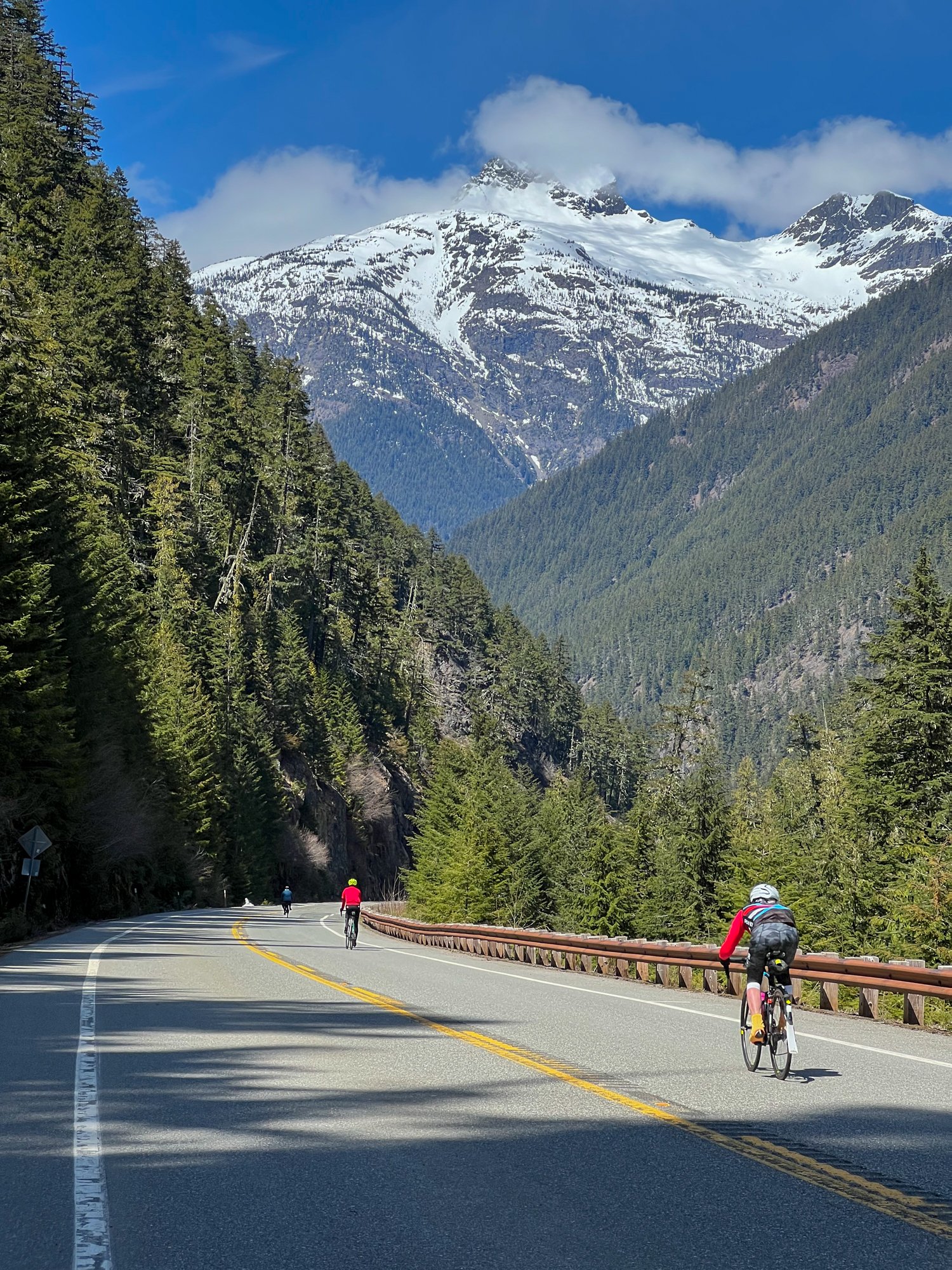
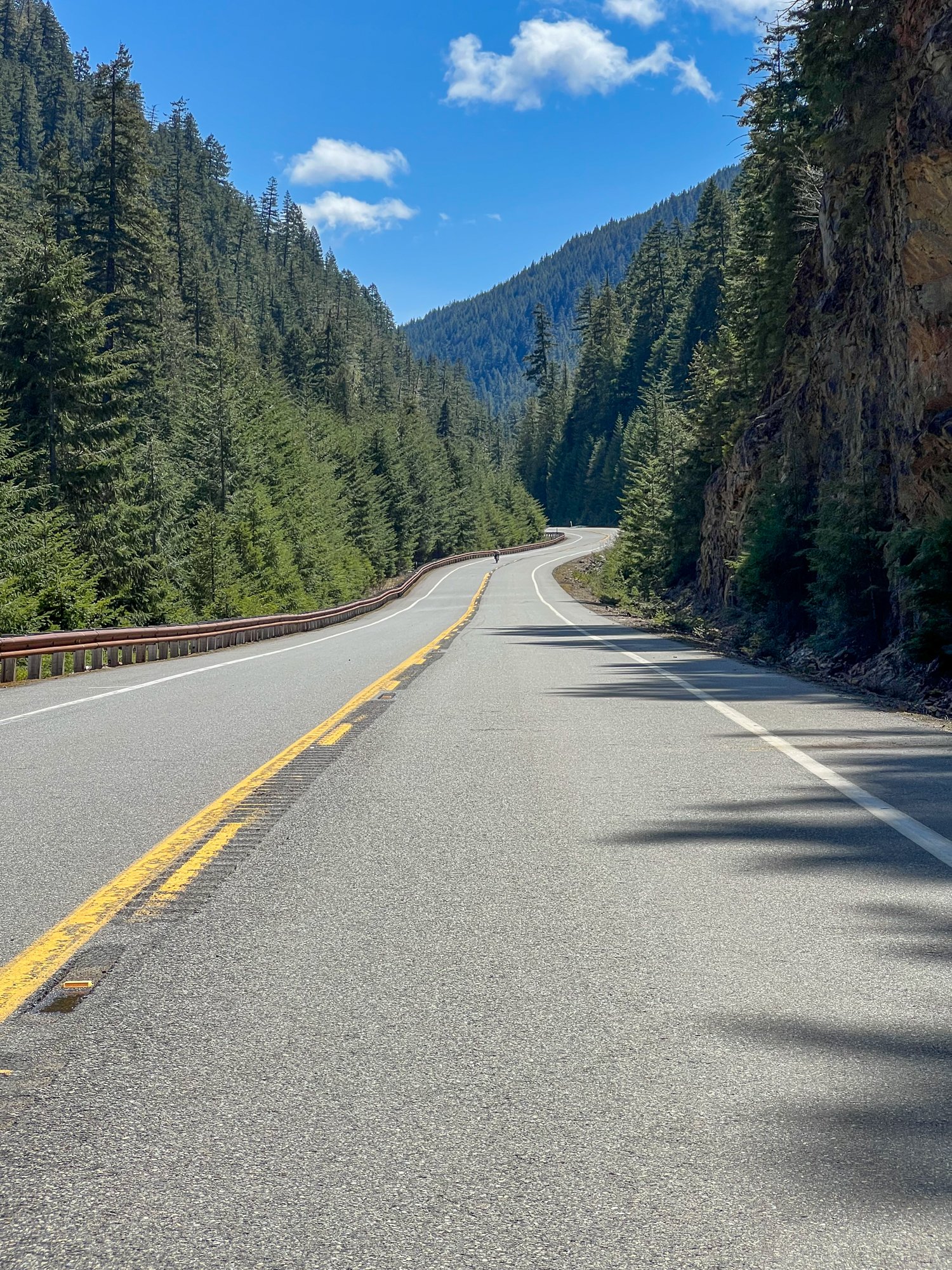
Way up in the North Cascades, twenty miles from the Canadian border, is a road that carves its way through the jagged, granite peaks that crown the state of Washington. This is Highway 20, and it’s where I’ve done some of my favorite summer alpine rock climbing. Every winter, WSDOT closes this road (as well as others at high elevation) and in the spring, there’s a massive effort to clear a path over the mountains.

WSDOT’s goal is to open the road as quickly as possible to cars. The entire process takes about 6-8 weeks depending on snowfall. Crews from the east and west work to plow through 7-8 feet of snow and manage avalanches along the way. Last year, I learned that cyclists could enjoy the road without having to share the road with any cars. Immediately I began to count down the days.

The key is to head up when the most amount of road has been cleared, but just before they’ve opened it up to cars. It’s only open for recreation between Fridays and Sundays so you have to hope that the weather is clear enough to see the summits and you don’t already have plans when it all lines up.

I got lucky this year and on Sunday, May 1st I drove two hours from Seattle to experience what I’d been waiting the better half of a year for. The forecast was sunny and 70°F. There was still some more snow left to plow, so I couldn’t ride over to the other side of the pass though.

View fullsize _DSC9606.jpg
View fullsize _DSC9608.jpg
View fullsize IMG_5153.jpg

The overwhelming majority of people making the pilgrimage to Highway 20 drive as far as they can before they’re blocked by a gate, where they start their pedaling. I decided instead to start riding from the last small Seattle City Light company town on the western side of Washington Pass called Newhalem. By starting here, I’d be adding ~3,000ft more of elevation over roughly 30 additional miles. I stubbornly figured I was strong enough for this and didn’t think twice. I was a bit surprised though when I found no one else that morning at the Newhalem parking lot.

As cars skirted past me uphill, bike racks fully loaded, I pitied them for missing out. The small foothills gradually grew to rounded mountain tops flanking the man-made reservoirs of Gorge Lake, Diablo Lake, and Ross Lake. I usually find dams obnoxious but I had to admit that these were stunning.

View fullsize IMG_5184.jpg
View fullsize IMG_5165.jpg

The clouds hadn’t broken up yet, and I began to question whether I’d get my forecasted sunshine. The higher up I went, the more it felt like stepping into a freezer. I questioned my decision to bring just a windbreaker and skip the full-finger gloves. I decided not to check my phone's map; it was a weird feeling not knowing how close I was to the gate where everyone was parked. My hamstrings began to cramp, and I wasn't even at the "regular" start. Doubts were creeping in on whether I was in shape to do the bigger rides I had signed up for. My bouts of negative self talk were broken by spectacular vistas, but only momentarily.

I brought my clunky DSLR/lens along, which meant I was slowed down by the weight but also by stopping, assembling it, and disassembling it whenever I thought to take a photo. I finally made it to the gate where everyone else was starting. It was a packed parking lot; cars were lining up on the shoulder. I intentionally had a late start to the day so I'd be out in the sun for longer. For every 1 person heading up, there were 30 zooming back down at this hour.

In addition to not looking at my phone, I decided not to listen to any music or podcasts. Occasionally I'd hear a few birds, sometimes the rush of a creek, the sound of my breathing, and many times what sounded like a car behind me. It was always the breeze in the forest, but it startled me at least a few times every hour.

View fullsize _DSC9641.jpg
View fullsize _DSC9673.jpg

Of course, everyone I saw was in a great mood. We all felt like we won the lottery that day. As hard as it was sometimes with the cramp in my hamstring getting worse, I wouldn't have it any other way. I was savoring the challenge. The thought of speeding down it all would be a sweet reward. I saw a few cyclists with skis coming down. They biked to where the snow line was and then skinned up. They were moving too fast for me to ask them to be my friend. #goals

IMG_5225.jpg
IMG_5210.jpg

Little by little, the uphill grind would be rewarded with more craggy peaks flanking me on either side. The occasional clumps of unmelted slush lingering on the side of the road were soon replaced by walls of white snow. I knew I was close, but I chose not to look at my map and also chose not to let the cramp in my legs slow me down too much.

View fullsize IMG_5237.jpg
View fullsize IMG_5257.jpg
View fullsize _DSC9724.jpg

Once I got to the snow line, I kicked off my shoes and laid down for a long time. I ate half of my stash of chocolate, chips, and candy within a few minutes. I also made sure to soak in the mountain views while stretching every muscle I had. I've seen these peaks before, but always from a car. It's entirely different when you earn it.

View fullsize _DSC9713.jpg
View fullsize IMG_5282.jpg

The descent started out fine, but then came the headwinds. I was expecting to hurtle down at over 35-40mph but I'd top out at 25mph. It was still fast but I had to pedal hard to get any real speed. Even heading back, there were a few soft hills that would seem to stretch on forever. The wind slowed me down to a crawl, 3mph. I was running on fumes.

This is the moment where I started to loudly tell myself not to give up and keep pressing on. I was one of a handful of people still left on the road, but I didn't see anyone for miles. When I made it to the gate, I didn't even glance at the folks partying and barbecuing tailgate party-style. I just kept pedaling. 15 more miles for me. I considered asking someone if I could hitch a ride, but knew I'd be disappointed in myself for taking the easy way out.

So I pedaled hard and fast. I was whooping for joy when I made it back to Newhalem. Again, no one was around because I'm not sure anyone else started this far behind. On the two hour drive back to Seattle, I kept wondering if the day lived up to my expectations. In hindsight, it absolutely did. In the moment though, I felt like I got my ass handed to me and couldn't get over that.

It was a wakeup call that I need to get in proper shape if I want to do the big Seattle-to-Portland in a day and Ride-around-Mt-Rainier rides. That headspace, running on fumes desperately searching for an ounce of strength, is probably one I'm going to become quite familiar with in the next few months.

Tags: cycling, north cascades, washington
2 Comments

Pinch zoom on mobile, click to expand on desktop

Outdoor goals for 2022 - effort vs interest matrix

January 20, 2022

UPDATE: here’s an end-of-year look back at 2022.

This’ll be my first full year of living in the Pacific Northwest, the closest I’ve ever been to big mountains. For the past few years, I’ve been daydreaming about all the activities I’d finally be able to immerse myself in once I moved out West. I always felt like I was playing catch-up, having grown up in a family that couldn’t afford to expose me to the great outdoors.

Comparing myself to others is not a healthy thing to do generally, but it helped me to dream big and do more than I would have otherwise. It all just pushed me to plan more thoughtfully, train harder, and be more intentional about where I place my energy.

In order to do everything on my wish list, I’d have to quit my job and live at least two lifetimes. I’ve used this framework of effort vs interest to help narrow down what it is I’d arrange logistics for, train for, and ultimately prioritize. The exercise of doing this helps me be realistic about what I can and can’t do in a given year. I’ve talked about this with friends and figured it’d be easiest to share a visual. Usually this happens on a piece of scrap paper that I scribble on for weeks. It also changes throughout the year based on any injuries, environmental factors, life circumstances, and new inspiration. Hopefully you get some ideas from this. If any are on your own list, do let me know!

Skiing

View fullsize 53738138_2105614306191047_676153514543546368_n.jpg
View fullsize 53359517_2105614069524404_247014572899172352_n.jpg
View fullsize 54520803_2105614226191055_9039454416184279040_n.jpg

I didn’t have a ski season last year because of the pandemic, so I regressed a bit in my skills. Much of this year is just playing catch-up aggressively so that I could feel confident doing some touring.

  1. AIARE 1 Avalanche + Rescue training - The larger goal here is to get out into the backcountry and earn my turns by skinning up the mountain. Before I can do that, I need to learn how to read snow conditions for avalanche risk. Accomplishing this is a matter of signing up for a course. At this point, it’s most likely that I’ll book it for the winter of 2023.

  2. 300,000 feet of resort skiing - The purpose of this goal is to feel more comfortable on skis by putting in lots of reps. To avoid practicing bad habits, I’ve committed to three ski lessons to correct my form. So far I’m at 27,000 feet of descent from two and a half days of skiing without trying too hard. This is a stretch goal, but pretty do-able if I take advantage of the night skiing at Stevens Pass.

Surfing

View fullsize IMG_0108.jpg
View fullsize IMG_0808.jpg
View fullsize DSC00117.jpg

This is pretty low on the interest axis, but it’s on there. Leah’s trying to get more into surfing and I’ve been reluctant given my aversion to being wet and thrashed around. I see this as a way to spend more time doing something she loves. The main goal here is to be good enough to enjoy doing it. The water won’t start warming up til May around here, so I’ll probably have to get used to a thick wetsuit.

  1. Surfing in Westport, WA - The closest decent destination for surfing in Seattle is just below the Olympic Peninsula in Westport. It’s about 3hrs away from Seattle, so it’s too far to make a day trip out of it so we’ll make a weekend of it.

  2. Surfing at Short Sand Beach, OR - On our drive along the Oregon coast we stopped by to check it out. It looked like a beginner surfer’s paradise: smooth sand, sheltered cove, and a short hike through a magical PNW forest.

Cycling (road & gravel)

View fullsize 241189715_4287335788018877_7011972427568503726_n.jpg
View fullsize 109727926_3104463222972812_556991718824662311_n.jpg
View fullsize 241284458_4287334074685715_2069078048740641457_n.jpg

I have a lot of cycling goals, but it’s not because it’s the activity I enjoy the most. Every time I’m on my bike, I am mildly annoyed because I wish I was spending time climbing instead (true story). Still, I get excited looking at a map and drawing an ambitious line through a place I’ve never been to. Cycling also is something I can do on my own without much advanced planning. The endurance I built up from my low HR runs also means that I can cover a lot of mileage without breaking a sweat on two wheels.

  1. Car-free Mt Rainier Sunrise Road (30+ mi, 3k ft ele) - Sunrise, nestled on the east side of Mt Rainier, is the highest point you can drive to in Mt Rainier National Park at 6,400ft in elevation. It’s also the last road to get plowed and open to cars. While the plows are still making progress, it’s possible to bike up for face-to-face views with the mountain without not have to worry about sticking to a shoulder lane. The trick is to time it so you ride it as late as possible, when it’s warmest and the most amount of road is accessible, but before cars are allowed through. This usually happens late-June or early-July depending on snowfall that winter. I’ve set a reminder on my calendar to check road conditions every few days. More info.

  2. Car-free Highway 20 cycling (50+ mi, 6k ft ele) - Highway 20 is the iconic road that cuts through the Northern Cascades. I’ve done some climbing there and never appreciated how special the scenery was until I moved to Washington. I just assumed the entire state looked like this. The road is popular with cyclists all-year round but there’s a sweet spot in the year when it’s plowed but not yet open to cars. This usually happens between late-April to early-May. Depending on how much is plowed, this can be a 30mi ride or a 100mi out and back. I’ll be checking WSDOT pretty regularly. More info.

  3. Mt Adams gravel cycling loop (50mi, 4k ft ele) - I only got into cycling two years ago, but I was most excited about gravel riding. The views, solitude from cars, and adventure aspect all appealed to me. This is a route that’s at the foothills of Mt Adams. Someone described is as one of the best rides from their summer. I’d probably do this in early July. Route line.

  4. 2-day bikepacking Olympic Adventure Trail (66mi, 8k ft ele) - I’ve never bikepacked before, but it doesn’t seem very complicated. Still, I decided to ease into it with this route in Olympic National Park. I initially planned on doing this out and back in a day, but figured it’d be more enjoyable if I took my time even though I’d be carrying overnight gear. Someone recommended doing this in the winter when there are fewer people around, so I’ll want to wait for a streak of dry weather in March to ensure the singletrack isn’t muddy. Route line.

  5. Mt St Helens 2-day bikepacking loop (80mi, 12k ft ele) - The scenery here is notably different from the lush Olympic Nat’l Park. The eruption of Mt St Helens in 1980 left the landscape still recovering, with green ferns dotting the landscape but plenty of open vistas in all directions. Best time to do this would be mid-July to late-September before the first snow falls. Route line.

  6. Seattle triple-ferry bike ride (100+mi, 6k ft ele) - This was something that I saw on Reddit that interested me. It’s a loop around the greater Seattle area that incorporates three ferries. Timing of the riding is pretty important to line up departures so I’d attempt on a long summer day. Route line.

  7. RAMROD: Ride Around Mt Rainier in a Day (150mi, 10k ft ele) - This is a very popular event typically held on the third Thursday of July. There’s a lottery to get in but some tickets are auctioned for several times the face value, with the proceeds going to the National Parks. The scenery is spectacular as you ride with Mt Rainier looming over one shoulder. Getting one of the 800 spots is mostly a matter of luck. I’ve considered attempting it unsupported, but I’d only consider this if I wasn’t alone given how mentally exhausting the mileage sounds. Route line.

  8. Seattle to Portland in a day cycling (200mi, 5k ft ele) - This is an annual event that attracts a massive amount of riders, almost too many from what I’ve read. The route is often done in two days but I’d be keen to try it in a single push. Much of it is flat, so it’s more of a mental challenge to endure the monotony. Much of it isn’t particularly scenic, so it’s low on my interests, but I’d like to do it just because it sounds cool to say I’ve done it. I haven’t registered yet, but it’s scheduled to be held on July 16-17 this year. Route line.

Mountain biking

View fullsize 170738827_3858610100891450_5760770500317438633_n.jpg
View fullsize 262183231_4565400463545740_6032022996857151891_n.jpg
View fullsize 260765701_4565402896878830_6053781882776632667_n.jpg

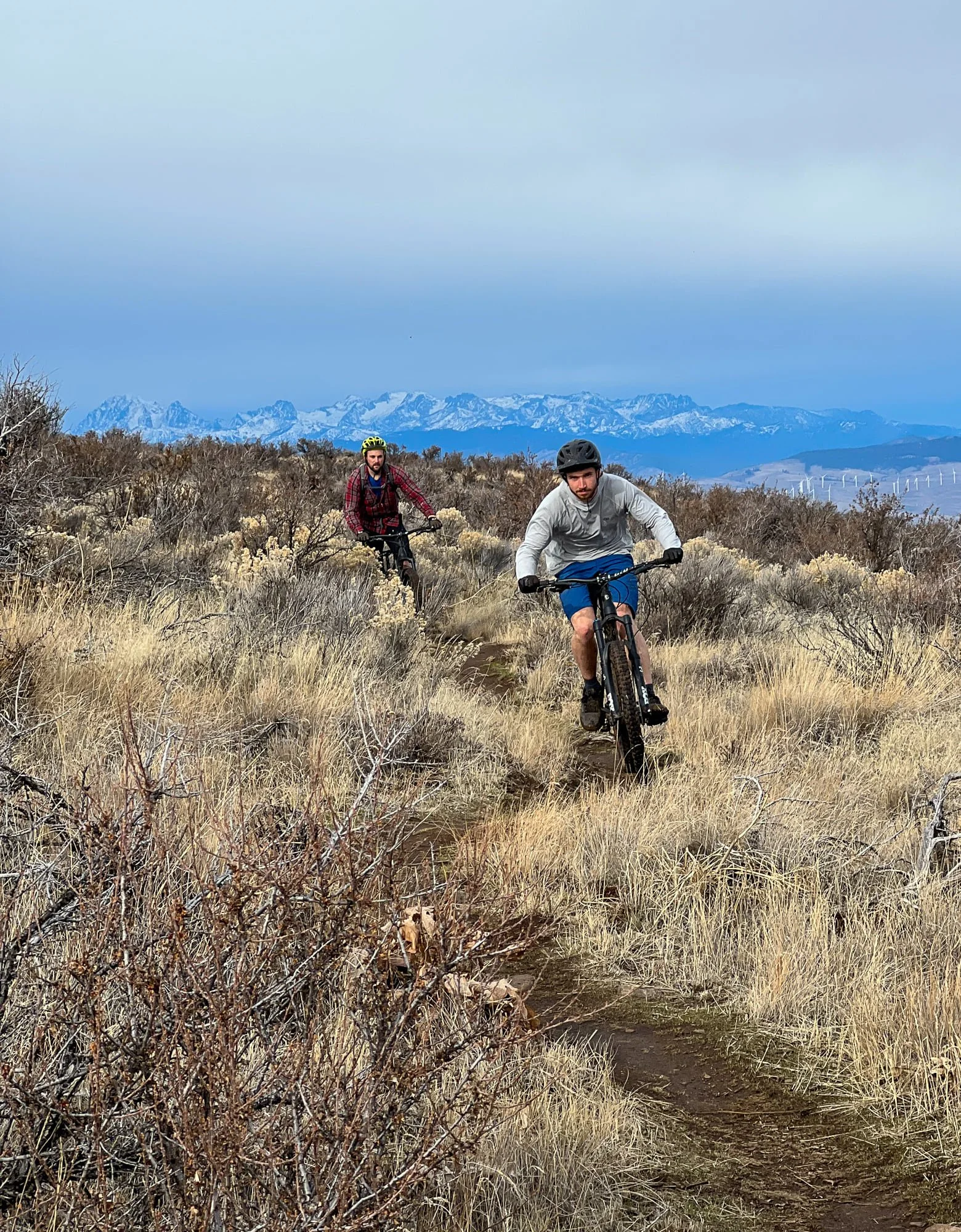
There are so many fantastic destinations to ride around Seattle, and mountain biking is something Leah and I can easily do on a weekday summer afternoon when it’s still bright outside for hours. I’m still a beginner and need to learn how to make smoother turns without losing speed. Most of these are pretty modest goals but it will take effort. Getting really good at the sport would require a lot more dedicated practice than I’m willing to commit. Mostly, I’m just trying to have fun with this one.

  1. Clean descent of Inside Passage, Tiger Mountain (1.7mi, blue) - If I do this route enough times, I’ll get it dialed and can know when to speed up and when to slow down. Route line.

  2. Clean descent of Olallie (9mi, blue/black) - I haven’t done this route yet, but it looks beautiful. After a long climb, it’s a sweet descent. It’s longer than my other goal, so it’ll require a lot of pedaling up to get it dialed in with repeat laps. Hopefully I can get this done by the end of October, when the Seattle rain typically starts. Route line.

Climbing

View fullsize 20728940_1415455808540237_6966537877613231268_o.jpg
View fullsize 122044678_3403317066420758_4209451758243134517_n.jpg
View fullsize 42087779_1853888721363608_7509356313936134144_n.jpg

Climbing is what inspires me to train and stay in shape. I like to say that all of my other activities exist to make me a more capable climber. Being in the alpine environment on moderate terrain is what I’m most passionate about. The North Cascades is a perfect playground for this. To make most of these happen, I’ll need to train for endurance in the climbing gym and also get myself out there on smaller, less committing routes at Index, Exit 38/32, Frenchman Coulee, and maybe even Beacon Rock along the Columbia River.

  1. Guided climb: 3rd Pillar of Dana (5.10- III, 5 pitch) - For my birthday, Leah gifted me a guided climb with my favorite climber, Peter Croft! I am thinking I’d take advantage of this amazing gift by climbing one of the High Sierra classics in August. I just have to hope wildfire smoke doesn’t ruin my plans. Route beta.

  2. Guided climb: Red Dihedral, Incredible Hulk (5.10b IV, 12 pitch) - While I’m down there, I figure I might as well get guided on another big classic. Hopefully all this movement on big terrain helps me feel more comfortable having longer days on the sharp end. Route beta.

  3. Sport climb Prime Rib (5.9-, 11 pitch) - A 5.9 sport route that goes on for 11 pitches? I couldn’t believe it when I first heard about this route years ago. I would’ve tried this route last summer if not for the wildfires that overwhelmed the Methow Valley. Making this route happen is mostly about picking a quiet day, finding the right partner who can move fast, and starting early on a weekday to avoid crowds. Route beta.

  4. Sport climb Flyboys (5.9, 18 pitch) - Just next door to Prime Rib is Flyboys, which is around the same grade but almost twice as long. If I can pull off Prime Rib with the right partner, I’ll have a better sense of how feasible this objective would be. Route beta.

  5. Trad climb Ragged Edge of Vesper Peak (5.7, 6 pitch) - This is a solid alpine rock route with stunning views and great exposure. It’s exactly the kind of moderate route that sings to me. Unfortunately, I’m not the only one. Just like the other climbs noted earlier, finding the right partner, moving fast, and starting early are key. Route beta.

  6. Trad climb Outer Space (5.9, 6 pitch) - This is one of the most popular crag routes in Washington. The easy access does mean that I’ll be less “out there” if things go south, but it’s also not a grade I’ve ever led on gear (that’d be a 5.8 in Joshua Tree). Fortunately, it’s a crack system that I’d follow, which I love to climb. Route beta.

Mountaineering & scrambling

View fullsize 67317873_2335811923171283_1640244814886731776_n.jpg
View fullsize 20643422_1415454425207042_1530952689121760677_o.jpg
View fullsize 67444482_2335810339838108_287489979624456192_n.jpg

I spent a total of five weeks guided in the North Cascades, learning to navigate safely through glaciers to reach icy summits. That was several years ago, and the amount of logistics to get onto glaciated terrain when I lived in NYC meant that it wasn’t something I practiced often. The skills I had have eroded away, so I’d like to rebuild and I’m living in the perfect place for it these days. Fortunately, my fitness is dramatically better than it was years ago and I’ve become more capable in other ways (e.g., I got my Wilderness First Responder certification).

  1. Mt Adams South Spur, snow scramble (14mi, 7k ft ele) - This is basically an intermediary goal to get me comfortable again with my crampons and ice axe. It’s the easiest route up to the summit of Mt Adams and used to be climbed by mules back in the day. You can even bring your dog up. The more snow there is, the easier the route becomes, so it’s likely I’d attempt this in late April or early May (buying a $10-15 pass is required after May 1); I’d most likely want to attempt this in one big day to keep it fast and light (and also not have to carry my poop out). Route beta.

  2. Ruth Mtn Glacier climb (12mi, 4k ft ele) - This is another easy objective that would provide spectacular views of Mt Shuksan and Nooksack Tower. The additional skill to incorporate here is roping up for glacier travel. Best time to attempt is anywhere from June til October, but I’d likely aim for June. I’d definitely want to try doing this in a single day. Route beta.

  3. Eldorado Peak glacier climb (10mi, 7k feet ele) - This is a summit I’ve stood on twice, both times under the supervision of a guide monitoring my decision-making. It’s a big day to reach base camp, and a rather short and straightforward ascent to the summit. It’ll involve roping up for glacier travel and carrying additional gear for overnighting. This would be my third summit on the peak, but I’d like to try it again because of how beautiful the terrain is and also because I’m familiar with it. “…it is in the middle of a collection of beautiful peaks. Massively aloof, perched at the edge of the largest contiguous ice-sheet in the lower 48 states not connected to a volcano, the summit has a Himalayan like splendor owing to its remoteness, position, and knife-edge summit ridge.” Best done between July and September, so I’d most likely I’d aim for late July. Route beta.

  4. Colchuck Peak glacier climb (14mi, 5k feet ele) - This peak sits in the gorgeous Enchantments area of the Alpine Lakes Wilderness. It seems to be easier earlier in the season when snow is covering the talus, but given that I’ve got other objectives in mind already, I’d likely attempt this in early August. The additional skill being challenged here is routefinding on both the ascent and descent. I’d most likely take advantage of long daylight by attempting this in a big day with an early start, but I’m still dependent on a camping permit for Colchuck Lake (~14% success rate). Depending on my comfort level, I may combine this with Dragontail peak. Route beta.

  5. Fisher Chimneys on Mt Shuksan (4th class, 7k ft ele) - This is a route that combines mountaineering with some 4th class scrambling. I’ve been on Mt Shuksan before, but we were rained off of it several hundred yards from the summit. Loose rock is another hazard to be mindful of, especially due to the popularity of the route. If I arrive to the base of the rock portion tired from the hike up, that’s a bad sign. Training my endurance will be important. Most likely I’d attempt this in mid or late August. Route beta.

Backpacking & day-hiking

View fullsize 170483119_3858613327557794_2406776627237997050_n.jpg
View fullsize 104452602_3035765209842614_6499779771388539246_n.jpg
View fullsize 119672645_3296018567150609_206225414451654327_n.jpg

I lost interest in backpacking and hiking when I was exploring the peaks of New England, but I’ve got a renewed interest for it with the expansive terrain of Washington. I wouldn’t consider myself a trail runner, but I would say that I’m a fast hiker, especially when I’m on my own and can get in a certain headspace.

  1. Thru-hiking Snoqualmie to Stevens Pass in 5 days (75mi, 16k ft ele) - As soon as I saw this line on a map, I was immediately interested. This is considered Section J of the Pacific Crest Trail and there isn’t a single road that you’d come across til you’re finished. Many of the dozen alpine lakes are even swimmable in late summer. Some areas are impassable until the snow fully melts in August, so this likely would be something for late August and would require taking some days off to complete. I’d most likely try this during the days before Labor Day or after, to avoid the holiday crowds. Five days would be the plan if Leah can join me, but I’d attempt it in four days if I was going solo. The hardest part may be arranging transportation for a dropoff and pickup. Route beta.

  2. Enchantments thru-hike in a day (18mi, 5k ft ele) - This is probably the most popular trail in all of Washington state. Most people attempt to spend only a day in the Enchantments because of how hard it is to get a permit (less than 2% success rate). For those who can manage it, a day hike is the best way to do it. Because this is a point to point trail, arranging transportation is likely to be the hardest part. Logistics are made easier if I don’t attempt this alone, but I would love to get lost in my own head out there. Route beta.

  3. Day hike Harts Pass to Rainy Pass (31mi, 4k ft ele) - This is another section of the PCT that I’d be interested in doing. It’s a small section that could be feasible in a day, and seems perfect for late September or early October when the larches are glowing gold. Again, the transportation logistics would be the challenge given it’s a point to point trail. I know of one person who did this trail with another solo hiker traveling in the opposite direction. When they crossed paths, they traded car keys. Route beta.

  4. Mt Rainier Wonderland trail in 3 days (93mi, 22k ft ele) - The Wonderland trail is a giant loop around Mt Raininer, with broad meadows of wildflowers, waterfalls, and inspiring views of the mountain over your shoulder. This is by far the most intimidating goal on the entire list, even though it’s probably safer than any of my climbing objectives. What gives me chills is the rigor of hardcore training that would be required to pull this off. Most people do this trail in 7-10 days, but that requires a lot of permitting for campsites per night. The people who do this in 3 days are legit ultra-runners, and usually have support from the outside to make it happen (either friends or paying a company $1500). The best time to do this seems to be August. If for whatever reason this doesn’t go down in 2022, it’ll be a priority goal for 2023. This will happen. Route beta.


All of this is pretty local to where I live, with the exception of going to the High Sierras to climb. One of my priorities for the year was to explore locally as much as possible. There’s so much to do around here that it felt wrong to hop on a plane to recreate. Still I’ll be traveling back to NYC often to visit my family, Massachusetts for Leah’s family, and I’ll be taking my dad out to the Kenai peninsula in Alaska to go fishing for five days as a retirement gift in early July.

Writing this out in more detail than the usual notepad scribbles helped me tremendously. Rather than feel like there’s too much to do, I’ve limited my focus to a few goals that are within reach if I put in the effort (and get lucky with conditions). Even if I accomplish half of this list, it would be an epic year. Although my calendar is looks full, there’s still lots of blank spaces to fill with spontaneity and new inspiration. There’ll certainly need to be other objectives along the way that serve as stepping stones. I’m sure to learn a lot and make new friends along the way. What’s most exciting is how these experiences will set me up for an even more ambitious 2023! And of course, much of this will rely heavily on the support of my loving and beautiful partner in life, Leah.

Tags: sport climbing, skiing, mountain biking, climbing, cycling, backpacking, hiking, surfing, mountaineering
Comment

My favorite Seattle resources

December 14, 2021

It’s been 6 months since I’ve moved to Seattle from New York City, where I’ve spent the entirety of my life. I made the cross-country move because Leah got into the University of Washington for a grad school program; I was more than happy to pack up and settle in closer to the mountains. She would’ve started in 2020, but remote learning sounded lame so we deferred the move for a year. During quarantine, I daydreamed almost daily about being in the PNW.

If you know me, you’ll know I have an obsessive personality. I got to know New York City pretty damn well in my 20s after countless hours of research and discovery of the food, nightlife, history, and vibe. I wanted to immerse myself into Seattle culture similarly so I could make the most of my new home once I arrived. Below is a list of what I read, listened to, and watched for well over a year, all in the hopes of getting a faint pulse on what living here could be like. This list is intended entirely for the benefit of you, who may be a recent transplant like me. If you’ve been around for a while and have recommendations, drop em in the comments.

Politics/News

KUOW Seattle Now - A 12-15min podcast that drops an episode every weekday covering a mix of local and national headlines. Always upbeat, often funny and interesting. It’s the first podcast I listen to during my morning warm-ups. KUOW (local NPR station) has other podcasts, but this is the only one I really liked.

r/SeattleWA and r/Seattle - I find it pretty easy to stay on top of local news and politics for Seattle, and I’ve never felt that way in New York City despite growing up there. Seattle feels more like a really big town than a major city. Initially I was annoyed there were two subreddits that seemed like duplicates. I later learned that one is a lot more frustrated than the other one about the homelessness problem. Seattle is a progressive city, but there’s a far left base and a center-left base. Both sides seem to think the other is totally wrong. If I had to guess, Seattle will trend more center-left in the next decade because of higher-income earners from tech jobs.

Food

Eater Seattle - I ignore the “Essential” and “Hottest Brunch” maps, I zero in on the posts about the general food scene, focusing more on neighborhoods, restauranteurs, and local policies. It all helps me get a sense of what folks here prioritize in a meal. The Infatuation is cool too, but there’s more of a focus on simple lists (which are great too).
Your Last Meal - This isn’t a Seattle-focused podcast, but the host (Rachel Belle) is based out of here. The premise of each episode is to interview a mildly-famous celebrity and ask them what their last meal would be; she then researches the food and shares some cocktail-party knowledge insights. They’re always fun and she often finds a way to tie it back to Seattle. In one episode she tried to answer why Seattle has so many Thai restaurants. The answer was a lot more complicated than you’d think.

Little Free Bakery - Every Tuesday Lanne Stauffer fills a box up in front of her house with awesome pastries for anyone who happens to be walking by.

Too Good to Go - Several other cities do this, but I didn’t hear about this app til I moved here. Basically, for food that may go soon, a restaurant or shop can sell it for a steep discount rather than throw it away. It’s always a surprise bag what you get. We’ve scored several pounds of Theo’s Chocolates for $7 and brought it as a gift. Another haul was fresh pasta that would go bad in 4 days from a local shop.

City living

Evergrey daily newsletter - This is a free newsletter delivered daily to your inbox about what’s going on in Seattle. The local headlines are briefly summarized and interesting events are shared.

Buy Nothing - Maybe you’ve heard of these local groups after the NYTimes did a write-up recently. These are Facebook groups that are organized around specific neighborhoods, where members can post things that they’d like to give away or post about what they need. It’s all pretty wholesome and neighborly. I gave away a bunch of stuff before my NYC move. A few things I’ve gotten are boxes of cereal, a 1TB hard drive, and a milk frother that half-works. A few unusual things I’ve seen and have definitely not gotten (but have seen people excitedly claim) are a bowl of half-eaten pad thai and a pair of used women’s underwear. Hopefully there’s one in your neighborhood. It actually started on Bainbridge Island.

The Future of Rapid Transit in Seattle - This 15min YouTube video did a great job explaining what the different transit options were in the city. I work from home so I don’t take mass transit unless I’m heading to the airport, but it helped me make sense of the light rail, monorail, express buses, and streetcars. A pretty fun video to watch was this guy riding every single mode of Seattle transit, including ferries, in four hours. He did a great one explaining the city planning of Vancouver and how that contributed to what it’s like today. I really like the mass transit here, but I haven’t had a wild homeless encounter yet.

Seattle Met - Another news source but mostly I check em out for the culture stuff.

Nature

Beasts of Seattle podcast - This a six-episode series where the host shares the history of the area from the context of one animal that’s relevant to the city. The host, Samantha Allen, is the artist-in-residence for Town Hall and does a great job telling the story of salmon, sea otters, dogs, orcas, Sasquatch, and crows. My favorite episode was definitely the salmon one, after which I was inspired to check out Carkeek Park to see the spawning in action. Town Hall hosts a bunch of events as well, but I haven’t been to any yet.

Nick Zentner’s geology lessons - Nick Zentner is a geology professor at Central Washington University. He has a gift for teaching, effortlessly keeping you engaged and entertained. I first discovered him while trying to learn what a coulee was before my climbing trip to Vantage. There’s a lot of fascinating history that helped me appreciate the landscape of Washington a whole lot more.

History

The Good Rain by Timothy Egan - I haven’t read this book myself yet; Leah picked this up and would read excerpts of it aloud before sleeping sometimes. I can’t overstate how beautifully it’s written. Timothy Egan was the Seattle correspondent for the NY Times and tells the history of the Pacific Northwest in a really thoughtful way. It’s next on my list of books to finish.

The Resident Historian Podcast - Once a week Feliks Banel will share random stories about Washington’s history. It’s very much a “history nerd” podcast. The content is great but the presentation could tighten up a little more. I learned about DB Cooper (only successful sky-jacking in US history), how a high school kid designed the state license plate, the “Pacific Graveyard” of sunken ships at the mouth of the Columbia River, and more.

Outdoor activities

The Mountaineers - The Mountaineers is a pretty old institution that helps advocate for conservation, outdoor education, and responsible recreation. There’s an annual membership, but it gives you access to a rich community that loves the outdoors at all sorts of skill levels, activities, and courses. I think the “Seattle freeze” is bs. If you have a hobby, especially if it involves getting outside, it’s extremely easy to socialize. I’ve been here only a few months but did a few activities with the Mountaineers already like a wild mushroom foraging weekend; I will never look at the forest floor the same way again.

Facebook groups - Some days I wish I wasn’t into so many different sports. I feel like there’s never enough time to do it all. I will spend several lifetimes to get through all of my climbing, bike touring, backpacking, mountain biking, etc objectives if all I gave myself were weekends and PTO days. I’ve never wanted to quit my job more than after moving to Seattle.

  • Washington Hikers and Climbers - Pretty beginner-friendly. Great for checking out trail conditions given how many photos are posted daily.

  • Northwest Gravel Riders - I got into gravel cycling to get away from car exhaust fumes and see some beautiful scenery in solitude. There’s lots of fire roads through the foothills of the Cascades. Great resource of friendly people.

  • Seattle Rock Climbers - General climbing group chatter, great for finding gym or crag partners.

  • Seattle Mountain Running Group - Very serious group of strong runners that inspire me to train harder so I can someday sprint on ridgelines and alpine meadows.

  • PNW Peak Baggers - Not a fan of the name, but the people here post great beta about interesting routes. Great community.

  • Washington Skiing and Snowboarding - General ski/ride group, great for carpooling to resorts, getting latest conditions. Similar to Ski the Northwest.

  • Backcountry Touring In The Pacific Northwest - Once I get avy certified and get into backcountry skiing next season, this will be a great resource.

  • Washington’s Alpine Climbing and Ski Mountaineering group - Another advanced skills group with great beta.

  • PNW Mountain Bikers - General mountain biking in the broader area group. Great for reminding me to use my mountain bike.

  • PNW Wild Mushrooms - I joined this after the mushroom foraging weekend I did so I could retain the esoteric knowledge I picked up.

  • Seattle Mixed Climbing - A small but eager group of climbers hoping to grow the base of folks who are excited to swing sharp tools around at the crag. Haven’t joined any of their events because of a finger injury.

  • Climber Kyle’s blog - Kyle McCrohan is a local who is living out the adventures I’m daydreaming of. He writes great trip reports detailing it all so I see his stuff as a blueprint for my future goals.

WTA’s hike finder map - Washingtonians are so lucky to have such a cool resource. I sometimes use Hiking with my Brother’s map but it’s not as slick.

Claire Jencks (Mtn Biking) - Great YouTube channel on local mountain biking trails. Super helpful tips on navigating different bike parks.

Evergreen Mountain Bike Alliance and Cascade Bicycle Club - Great for finding events. Becoming a member is optional but helps keep em around to advocate for cycling.

Tags: seattle
Comment
IMG_643286D79CD9-1.jpeg IMG_643286D79CD9-2.jpeg IMG_643286D79CD9-3.jpeg IMG_643286D79CD9-4.jpeg IMG_643286D79CD9-5.jpeg IMG_643286D79CD9-6.jpeg IMG_643286D79CD9-7.jpeg IMG_643286D79CD9-8.jpeg IMG_643286D79CD9-9.jpeg IMG_643286D79CD9-10.jpeg IMG_643286D79CD9-11.jpeg IMG_643286D79CD9-12.jpeg IMG_643286D79CD9-13.jpeg IMG_643286D79CD9-14.jpeg IMG_643286D79CD9-15.jpeg IMG_643286D79CD9-16.jpeg IMG_643286D79CD9-17.jpeg

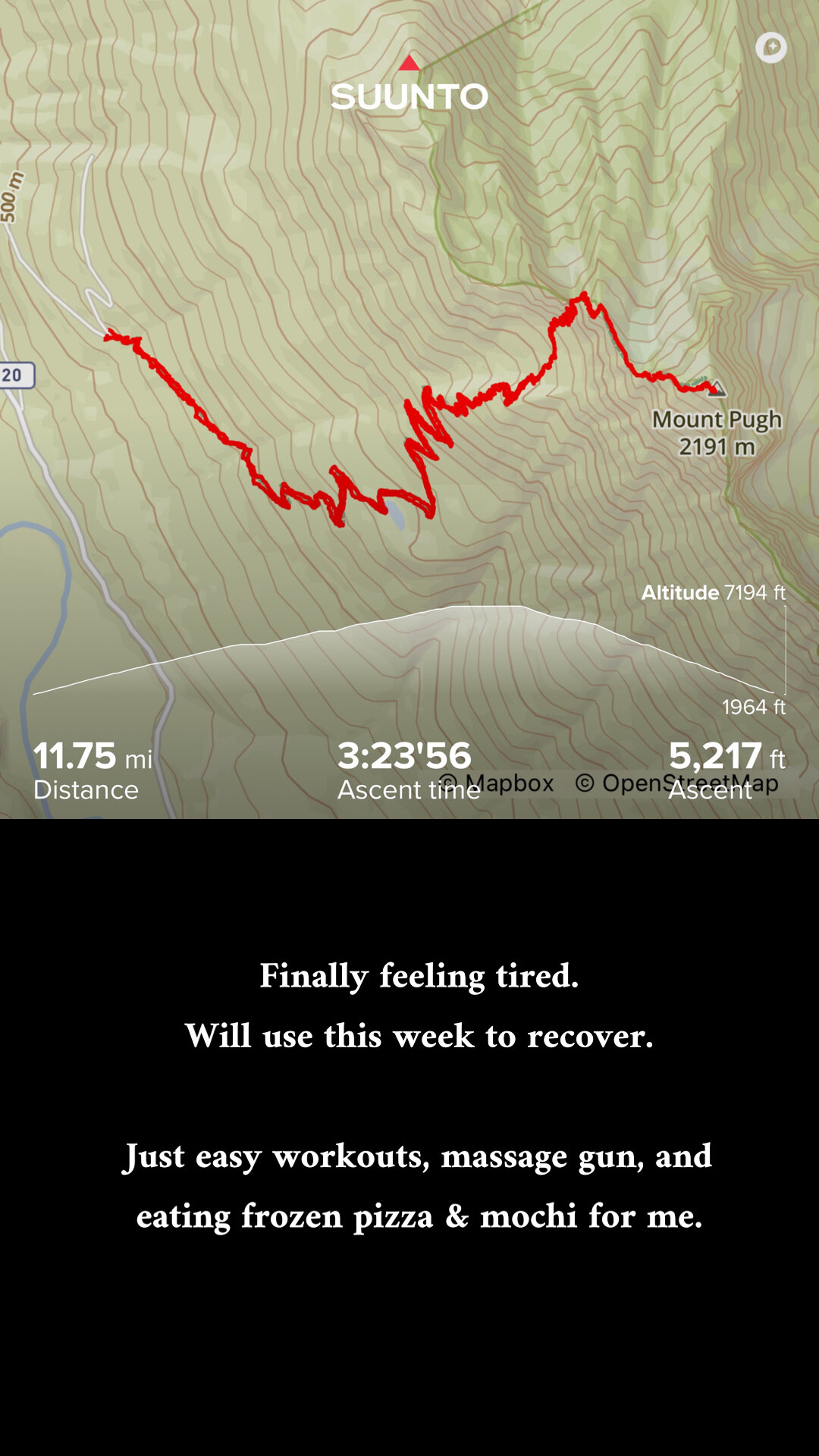
Hiking Mt Pugh (8/9)

August 10, 2021

Filming the last 10 meals I'll miss most in NYC

May 25, 2021

Just days before leaving for Seattle, I completed and published my first video project. In the months leading up to my cross-country move, I had the idea that I should do a final lap at the ten spots I’d miss most. I wanted to remember and document this and decided narrating over video would tell this story best.

Working with video had intimidated me for years, so I stubbornly stuck to photography and writing. I knew that I needed to practice in order to strengthen that creative muscle, but nothing had inspired me to put in the work til now.

The easiest part about this project was choosing the ten places. What I found most challenging was getting over my own awkwardness about filming myself eating, talking into a camera in public, and explaining to the restaurant staff what I was doing. A lot of this was due to my personal distaste for coming off as an obnoxious influencer type. I never fully got over my reluctance with talking in front of a camera while strangers were around, but I did become more comfortable and relaxed as I ticked my way through the list. I could see this in the footage as there were notably fewer disfluencies (ums and uhhs) and other nervous ticks.

During the editing process, I assumed I’d feel uncomfortable with the sound of my own voice but never did. Instead, I never really thought about how the person on my screen was actually me from a few hours earlier. I’m not sure why that is, but it’s not because I put on a persona that was untrue to me. I wanted to keep it pretty understated, obviously I wasn’t going to beg people to smash that subscribe button.

Similarly, I wanted to keep the filming equipment as simple as possible. I entertained the idea of a special mic that would cut down on wind noise, but quickly became overwhelmed trying different equipment and even ruining some footage. I was spending more time on the the hardware and not enough on the content (or other important things like packing for the move). I told myself that only if I got more seriously into this, then I could justify the additional expense.

Someone suggested I do this in Seattle to document the dining scene there. I doubt this would happen. The reason this topic was compelling to me was because of the relationship I had to the city and its food scene. Doing this as a new transplant to Seattle would lack all of the nuance and cultural awareness that comes with being a native or long-time resident. The restaurants would be just another place to eat, unlike these ten in NYC where each spot is a trigger for personal memories from my past. I’ll miss them the same way I’ll miss my friends.

Also shooting food videos is work. There’s not a lot of fun in holding a camera to your plate instead of enjoying it fully or pointing it around a restaurant when other people are trying to eat. I was happy to put a spotlight on these locations though, especially after the pandemic. Also, I now have no worries about these places getting longer lines since I’m outta here!

I was most touched by the reaction from the Reddit r/nyc community (see here). I’ve been a part of that group for years and they can be quite critical, especially when it comes to food or self-promotion. Everyone was so sweet and supportive with their comments. For several of them, it made them nostalgic for NYC. Someone who was moving out said they’d try this list as well while they packed their things. Mostly it was a lot of people wishing me well and agreeing with my picks.

Overall, I felt pretty happy with how this project turned out. I’m glad I put in the work and not quit halfway through (as I was tempted to do early on). I’ll mostly like play around with making other videos.

Tags: video, food, nyc, new york city
Comment
Screen Shot 2021-03-06 at 2.26.24 PM.png

Margaret Atwood Teaches Creative Writing - Masterclass review

March 06, 2021

This post contains affiliate links. If you use these links to buy something, I may earn a commission. Thanks for supporting me!

Length: ~4hrs, 23 lessons

My rating: ★★★★☆ (4/5)

My one-liner takeaway: You don’t have a compelling story until the pattern of normalcy is broken; something has to happen.

Margaret Atwood is responsible for giving the world The Handmaid’s Tale (now a hit show on Hulu) but also for other novels that force us to pause and think about our own world, despite being a writer of fiction. To successfully create these kinds of universes, she has to strike the balance between something that is too complicated and just complicated enough to be brilliant. For budding writers, she suggests that they study the structures used in classical stories (e.g., Grimm’s Fairy Tales, Arabian Nights, etc) in order to successfully create deviations from them. One example of a deviation is trying out different perspectives of a narrator through trial and error, even asking yourself whether the narrator should know more or less than the characters in the story. In terms of character development, she stresses the importance of keeping the reader engaged. A successful character is one that the reader (and perhaps even you) can’t anticipate the next moves.

She also gives some practical tips on what to think about if you’re interested in reaching a wide audience. The beginning of your story is the most important, and there’s a good chance you won’t know how to write the beginning until you’ve written most of the manuscript. While the reading of your story is linear, the writing process shouldn’t be. When talking about the conclusion of a story, she calls out that unlike in previous centuries, modern audiences are more accepting of open endings rather than having it all tied up in a bow. My favorite part about the course was her explanation of speculative fiction, which takes elements of the present and extends them out to the future. The horrors of the world in The Handmaid’s Tale, she notes, were all trends that she observed at the time of the writing. I hadn’t realized it, but this was a genre that I loved quite a lot (1984, Brave New World, etc) when I was in high school. While I wish I had gotten exposure to her work earlier, but I’m happy I ended the course with a few new books added to my reading list.

If you’d like to hear it directly from Margaret Atwood, check out her course here. As of now there are over 100 instructors to learn from, with more being added every week!


This review is part of a larger series, where I try learning from every single course within the catalog. Find my full list here.

Tags: masterclass
Comment
Screen Shot 2021-03-02 at 6.57.09 PM.png

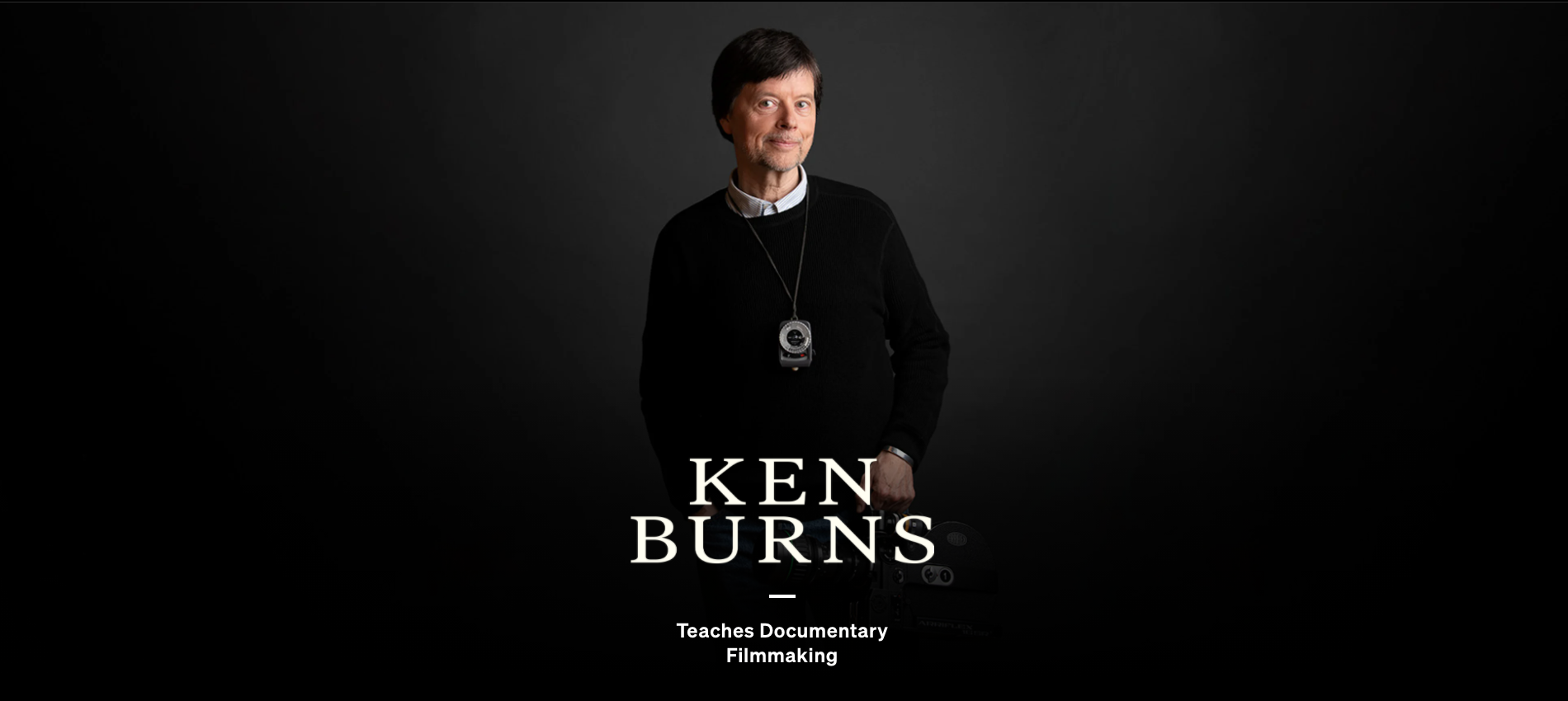
Ken Burns Teaches Documentary Filmmaking - Masterclass review

March 02, 2021

This post contains affiliate links. If you use these links to buy something, I may earn a commission. Thanks for supporting me!

Length: ~5hrs, 26 lessons

My rating: ★★★★★ (5/5)

My one-liner takeaway: Nothing else comes close to teaching you how to put together film like actually putting together a film.

I’ve taken more notes on this Masterclass than any other I’ve seen so far. Ken Burns uses the entire five hours effectively to share his theory around documentary film as well as the practical advice on the craft. He is a big proponent of getting in there and making something, rather than poring over books to figure out how to make the first step. Your first film will be your best teacher as he says. The course has plenty of case studies where he walk through various drafts of his past films, explaining why certain choices were made. In between these demonstrations, he provides thoughtful guidance like his warning that filmmakers should feel comfortable holding contradictory story lines, as the collective truth is always more telling than the singular truth. A successful documentary filmmaker’s role is not to find some kind of objectivity.

This kind of a nuanced approach to history allows Ken to connect the dry dates and names of history with an emotional narrative that brings the dead to life as he likes to say. He says that he uses the same framework and tools of storytelling that a feature film from Martin Scorsese would use for a blockbuster. I understand what he means by this. Despite the fact that the outcome is known (he is repackaging history), there’s still an arc that has suspense, drama, and leaves room for surprise. Ken goes into detail on a broad range of topics, covering pitching ideas, fundraising, scripting, scoring, interviewing, editing, researching, and more. It’s a great use of five hours especially if you’re a fan of his work and are curious to hear how the magic is made.

If you’d like to hear it directly from Ken, check out his course here. As of now there are over 100 instructors to learn from, with more being added every week!


This review is part of a larger series, where I try learning from every single course within the catalog. Find my full list here.

Tags: masterclass
Comment
Newer / Older
Back to Top

email: raja [@] rajahamid.com
ig: rajawashere